
Furnace Blowing Cold Air? What to Check Before You Call
QUICK ANSWER: A furnace usually blows cold air because the burners are not firing while the blower keeps running. The most common reasons are a thermostat fan setting left on ON, a clogged filter that overheats the furnace and trips the high limit safety switch, a dirty flame sensor that shuts the burners down seconds after ignition, a pilot light or igniter that will not stay lit, or a gas supply problem. Leaky ducts running through cold spaces can also deliver lukewarm air even when the furnace is working. Start by checking the thermostat and the filter. If the air is still cold after that, the cause is likely inside the furnace, and a technician should diagnose it.
It is a little after six on a January morning in the Kanawha Valley, and the house has that particular stillness that comes when the heat should have kicked on already. The thermostat is set to sixty eight. You hear the furnace start, you hear the blower spin up, and you feel air moving out of the register by the kitchen floor. You hold your hand over it and the air is cool, maybe a little worse than the room itself. The furnace sounds like it is working, but nothing about the air says so.
We hear some version of this call every cold season, and it is one of the more confusing symptoms a homeowner can run into because the system appears to be running normally. Air is moving, the blower is humming, and the thermostat is calling for heat. What is missing is the one thing that actually makes the air warm, which is the flame inside the burner compartment. In this guide we walk through why that happens, the causes we find most often in homes across the Charleston and Huntington areas, what you can safely check on your own, and where the line sits between a quick fix and a job for a trained technician.
Why a Furnace Can Run and Still Blow Cold Air
A gas furnace is really two systems working together. The first is the combustion side, which includes the igniter or pilot, the gas valve, the burners, the flame sensor, and the heat exchanger. The second is the air side, which includes the blower motor, the filter, the supply and return ducts, and the registers in each room. The air side moves air. The combustion side warms it. When the blower runs without the burners, you get exactly what you are describing, a steady stream of room temperature or cooler air.
Modern furnaces are built with safety controls that deliberately shut the burners down when something looks wrong, while leaving the blower running to cool the equipment off. That design is sensible, but it means a cold air symptom is often the furnace protecting itself rather than failing outright. Manufacturers such as Bryant and Carrier both describe this same pattern in their troubleshooting guidance, where a dirty filter, a dirty flame sensor, or a tripped limit switch leads to the burners going off while the fan continues to move air.
Burners Off, Blower On
Furnace burners shut off while the blower continues, circulating unheated house air through the registers.
Burners On, Air Still Lukewarm
Burners may stay lit while air feels lukewarm, suggesting heat loss somewhere within the ductwork.
Short Bursts Of Heat Followed By Cold
Brief warm bursts followed by cold air indicate flame sensor, limit switch, or airflow problems.
Knowing which of these three you are dealing with makes everything else easier, so spend a few minutes at a register and with the furnace itself before you decide where to look.
Start With the Thermostat and the Fan Setting
It sounds almost too simple, but the thermostat is where we find the answer more often than people expect. Most thermostats have a fan setting with two options, usually labeled AUTO and ON. In AUTO, the blower only runs while the furnace is actively heating. In ON, the blower runs continuously, whether or not the burners are lit. If the fan was switched to ON at some point, perhaps during the summer to circulate air or after someone adjusted the thermostat, then you will feel cool air coming from the registers every time the furnace is in its off part of the cycle.
Check these items first.
Fan Setting
Set the fan to AUTO, then run one complete heating cycle and check whether warm air arrives.
Mode And Setpoint
Set the thermostat to heat, with the target temperature several degrees above the current room temperature.
Batteries And Display
Check thermostat batteries and display brightness. A blank or dim screen may prevent reliable communication with the furnace.
Location And Readings
Avoid placing thermostats near sunlight, supply registers, or exterior walls, which can cause inaccurate temperature readings.
If the fan was the issue, you will see the symptom clear up as soon as you correct the setting. If not, the next place to look is airflow.
Airflow Problems That Make the Furnace Shut Itself Off
Restricted airflow is the number one reason we see furnaces shut their burners down early. A furnace needs a steady volume of air moving across the heat exchanger. When that air is cut off, heat builds up inside the cabinet faster than the blower can carry it away. A safety device called the high limit switch senses the rising temperature and shuts the burners off to prevent damage. The blower stays on to cool the heat exchanger, and the registers blow cold air until the furnace cools down and tries again.
The Air Filter
A clogged filter is a common cause. Check it monthly during heavy winter or summer use, replacing dirty filters at least every three months, or sooner when household dust increases.
Closed Or Blocked Supply Registers
Closing too many supply registers raises duct pressure and reduces airflow through the furnace. Blocked vents can contribute to overheating, causing the limit switch to shut burners down unnecessarily inside.
Blocked Return Grilles
Blocked return grilles restrict the air entering the furnace. Furniture, rugs, or stored boxes can cover returns and starve the system of airflow, reducing overall heating performance significantly indoors throughout.
A Struggling Blower Motor
A weak, dirty, or slow blower motor cannot move enough air. Unusual humming, squealing, or reduced airflow indicates the motor may need prompt professional attention from a qualified HVAC technician.
A Dirty Or Failing Limit Switch
A failing limit switch can shut burners off even when airflow is good. If filters and registers are clear, incorrect readings may require professional replacement by a qualified HVAC technician.
TIP: Write the date on the edge of your new filter with a marker the day you install it. During a West Virginia winter, when the furnace runs for long stretches on the coldest nights, pull the filter out and look at it once a month. If you can no longer see light through it, it is time for a fresh one.
When airflow is the cause, the fix is usually fast. Replace the filter, open the registers, clear the returns, and let the furnace go through a full cycle. If the burners stay lit and warm air arrives, you have solved it. If the problem comes back within a day or two, something else is restricting the air, and it is worth having a technician take a look at the blower and ductwork.
Ignition Problems: Pilot Lights, Igniters, and Flame Sensors
If the filter is clean and the airflow is good, the next suspect is the ignition system. Furnaces have to light the burners, confirm that a flame is actually present, and keep the gas valve open only while that flame is burning. When any link in that chain fails, the furnace will not heat.
Pilot Light That Will Not Stay Lit
Older furnaces use a standing pilot that ignites burners when heat is requested. If it will not stay lit, possible causes include a dirty pilot orifice or faulty thermocouple. Follow the furnace label or manual exactly when relighting. If the pilot goes out again, stop and arrange professional service promptly.
Hot Surface Igniters And Spark Ignition
Newer furnaces often use hot surface igniters or spark ignition instead of standing pilots. These components wear over time. A cracked or weak igniter may prevent burners from lighting, even while you hear clicking, the inducer, or blower operating during the normal startup sequence without producing warmth at all reliably.
A Dirty Flame Sensor
A dirty flame sensor can cause burners to light briefly before shutting down. Oxidation and residue prevent reliable flame detection, so the control board stops gas flow for safety. The blower may continue running, creating cool air. Repeated short heating cycles followed by cold airflow indicate this problem during operation.
Control Board And Lockout
After several failed ignition attempts, many furnaces enter temporary lockout and stop trying. The blower may continue running, while a diagnostic light displays a fault pattern. If visible through the furnace door, note the blinking sequence and provide it to the technician to help identify the problem promptly and safely.
Cleaning a flame sensor sounds simple, and in the right hands it is a quick procedure, but it involves working inside a gas appliance with the power and gas supply controlled correctly. We recommend leaving it to a professional unless you have been shown how and are comfortable doing so safely.
Gas Supply and Fuel Delivery Issues
A furnace that has everything else in order still cannot make heat without fuel. In our area, many homes run on natural gas, while others, especially in rural parts of Putnam, Mason, and Jackson counties, rely on propane delivered to a tank on the property.
Propane Tank Level
If you use propane, check the tank gauge. A low or empty tank can prevent ignition while the blower continues running.
Gas Valve Or Shutoff Position
Check that the gas valve near the furnace is parallel with the gas line. A closed valve can prevent fuel from reaching burners.
Utility Or Meter Interruptions
If other gas appliances also fail, the issue may involve the gas supply. Contact your provider rather than troubleshooting the furnace.
Gas Valve Failure Inside The Furnace
A failed internal gas valve can prevent fuel from reaching burners. This requires diagnosis and repair by a licensed HVAC technician.
If you ever smell gas, treat that as an emergency. Leave the house right away, do not touch light switches or use a phone inside, and call your gas utility or emergency services from outside.
When the Furnace Is Fine but the Ducts Are Not
Sometimes the furnace is doing its job and the heat is simply getting lost on the way to your rooms. This is common in older homes and in houses where the ductwork runs through spaces that are not part of the heated living area. In the Appalachian foothills, a lot of homes have duct runs through vented crawlspaces, unfinished basements, or attics. In January, those spaces can sit well below freezing.
Disconnected Or Leaking Ducts
Leaking or disconnected ducts waste heated air, leaving certain rooms colder while others remain comfortable throughout the house.
Uninsulated Runs
Uninsulated ducts lose heat while traveling through cold crawlspaces, making air from distant registers feel noticeably lukewarm.
Crushed Or Collapsed Flex Duct
Crushed flexible ducts restrict airflow, often caused by storage, pests, or settling that pinches the duct and limits heating.
Dirty Ductwork And Blocked Registers
Heavy dust, debris, or blocked registers can restrict branch airflow, making individual rooms noticeably colder than surrounding areas.
If your cold air symptom is limited to certain rooms, or if the furnace seems to be heating properly at the unit but not at the registers, ductwork should be on the list. A technician can inspect the visible runs, check for separated joints, and test whether the temperature at the furnace matches the temperature at the farthest register.
What You Can Safely Check and What to Leave Alone
There is a good set of steps any homeowner can take without opening up the furnace.
Reset The Thermostat And Give It A Full Cycle
Set the mode to heat, the fan to AUTO, and raise the temperature a few degrees. Wait ten to fifteen minutes before checking.
Replace The Filter And Open The Registers
Install the right size filter, with the airflow arrow pointing toward the furnace, and make sure supply registers remain open and clear.
Check The Furnace Switch And Breaker
Most furnaces have a nearby wall switch resembling a light switch. Check the breaker too.
Look At The Propane Gauge Or Confirm Other Gas Appliances Work
Check the propane gauge or test other gas appliances to determine whether fuel is causing the heating problem.
Look For A Diagnostic Light
If your furnace has a viewing window, note any blinking pattern and compare it with the label inside the furnace door.
Reset Once, Not Repeatedly
Press the reset button once after correcting an obvious problem. If shutdown happens again, stop resetting and arrange professional service.
Anything beyond these steps, including opening the burner compartment, handling the flame sensor, testing the gas valve, or replacing a limit switch or igniter, belongs with a trained technician. These parts sit inside a combustion appliance, and mistakes can create fire and carbon monoxide risks.
WARNING: A furnace that repeatedly shuts down, a yellow or flickering burner flame, soot around the furnace, a burning smell, or any smell of gas are signs to stop and get help right away. Carbon monoxide has no odor, and the U.S. Consumer Product Safety Commission urges every household with fuel burning equipment to have working carbon monoxide alarms and a yearly professional inspection of heating equipment. If an alarm sounds or anyone in the home has headaches, dizziness, or flu like symptoms that ease when they leave the house, go outside and call emergency services.
How to Keep This From Happening Again
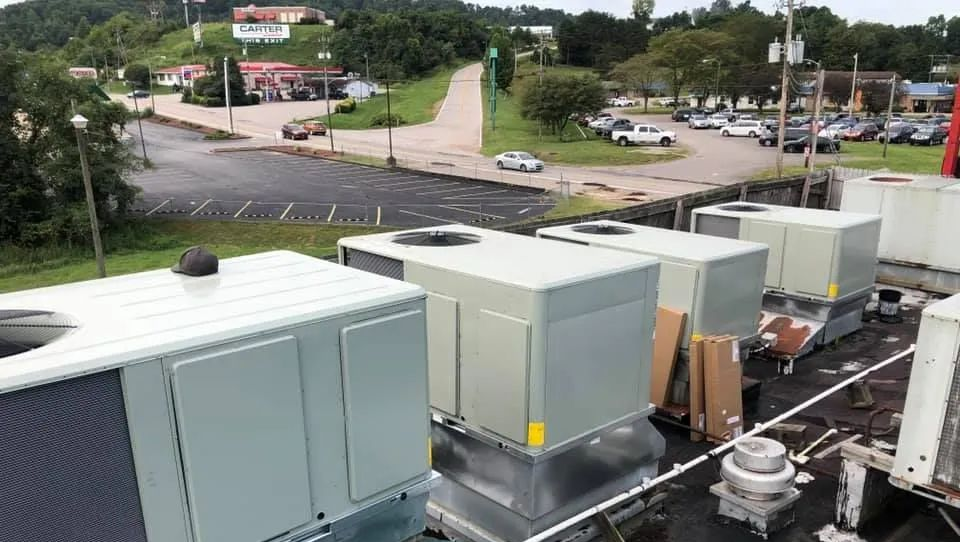
Most cold air problems are preventable. Schedule a fall tune up before the first hard freeze so a technician can clean the burners and flame sensor, test the igniter, check the limit switch and blower, and confirm the furnace completes its full sequence. Stay on top of filters with a monthly reminder during the heating season, and keep boxes and stored items away from the furnace and return grilles. Pay attention to early signs like longer heating times, new noises, or a different smell at the first start of the season. For commercial customers, the same idea applies to rooftop units, makeup air units, and the refrigeration equipment beside them, so a seasonal check on all of it keeps a kitchen running through the busiest winter weekends.
Frequently Asked Questions
Why is my furnace blowing cold air even though the thermostat is set to heat?
Common causes include a fan set to ON, a dirty filter, a dirty flame sensor, or ignition and gas problems. The blower keeps running while burners stay off. Check the thermostat and filter first.
Why does my furnace blow warm air for a minute and then go cold?
The furnace likely lights and then shuts down. A dirty flame sensor is a leading cause, and restricted airflow tripping the limit switch can do it too. A technician should diagnose it.
Can a dirty filter really make a furnace blow cold air?
Yes. A clogged filter restricts airflow, heat builds up, and the high limit switch shuts off the burners while the blower runs. Replacing the filter often fixes it, but recurring cold air needs further checks.
Is it normal for a heat pump to blow cooler air than a furnace?
Yes. Heat pump air feels lukewarm compared to furnace air even when working properly. It should still be warmer than the room. Brief defrost cycles in cold, damp weather can also cool the air.
Should I keep running the furnace if it is blowing cold air?
Run one full cycle after fixing an obvious cause like the filter or fan setting. If cold air returns, turn the system off at the thermostat and schedule service before components are stressed.
How often should a furnace be inspected in West Virginia?
Once a year, ideally in early fall before heating season. A pre season inspection lets a technician test ignition parts, the sensor, limit switch, and blower. Carbon monoxide alarms are also recommended.
A Cold Register Usually Has a Simple Cause
A furnace that blows cold air is rarely a mystery once someone looks at it in the right order. The thermostat comes first, then the filter and airflow, then the ignition parts and the flame sensor, then the fuel supply and ducts. Most of the time a small part is simply doing its safety job, and the heat returns once the underlying cause is corrected. Winters in the Kanawha Valley and along the Ohio River leave little room for a furnace that cannot be counted on.
With 25
years of experience serving Dunbar and Apple Grove, WV, AirTech Heating & Cooling
has seen how often a quick fall inspection prevents a cold house in January. Cleaned sensors, fresh filters, and tested igniters let the system finish its full cycle without tripping a safety control. When those pieces are checked before the first hard freeze, the furnace runs steadily through the coldest nights, and the registers deliver the warm air everyone expects.