
AC Blowing Warm Air? The Most Common Summer Causes and How to Spot Them
QUICK ANSWER: An AC blowing warm air usually comes down to a handful of causes: a thermostat set wrong, a clogged air filter choking airflow, a dirty or blocked outdoor unit, low refrigerant from a leak, a frozen evaporator coil, or an electrical part that keeps the compressor from starting. Some of these you can check in five minutes. Others, like refrigerant or electrical faults, need a trained technician. The fastest way to sort it out is to work from the simplest fix to the most serious, and to shut the system off if you spot ice or hear it straining.
Your thermostat says 72. The vents are still pushing air, but it hits your arm lukewarm, almost like bathwater, and the house keeps drifting past 80 while the humidity sits on everything like a wet towel. That's the exact moment most folks around here reach for the phone. Before you do, it helps to know what's actually happening inside that system, because the difference between a two-minute fix and a real repair is often something you can spot yourself.
We've worked on units across the Charleston and Huntington valley for more than 25 years, and warm-air calls spike every July. The causes repeat. Once you know the short list, you can usually tell the difference between a filter you forgot about and a leak that needs a gauge set and a licensed hand.
Start where the easy money is: thermostat and filter
Two things cause more false alarms than anything else, and both live inside your house.
The thermostat got bumped
It sounds too simple, but a thermostat flipped to "Heat" or a fan switch left on "On" instead of "Auto" will hand you warm air every time. Running fans constantly feels like room-temperature air between cycles. Set the mode to "Cool" and the fan to "Auto," then wait a few minutes. A dead thermostat battery can also misread the room and skip cooling calls entirely—fresh batteries often fix that.
The filter is packed with dust
This is the big one. A clogged air filter is a leading reason an AC runs but won't cool, since caked dust blocks the airflow needed to move heat. Carrier's troubleshooting guidance puts dirty filters at the top of the list. When air can't move across the coil, the system strains, and in humid summers that restriction can push the coil toward freezing. Hold the filter to a light—if you can't see through it, swap it. Replace every one to three months, or every four to six weeks during peak summer use.
Neither of these costs you anything but a minute. If the air is still warm after you've checked both, the problem has moved outside or deeper into the system.
When the trouble is sitting in your backyard
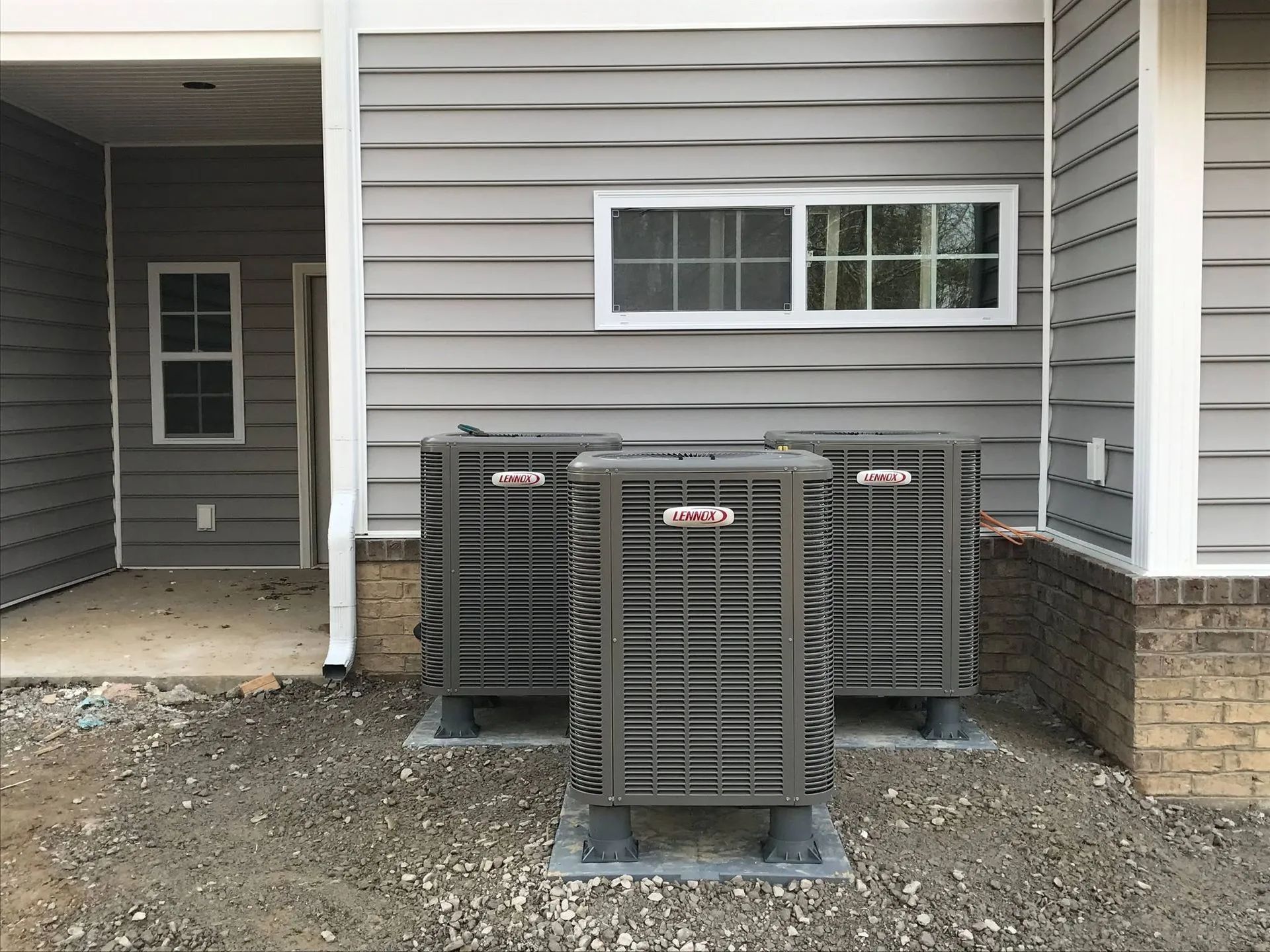
Walk out to the outdoor unit, the big square box with the fan on top. It has a job: dump the heat your system pulled out of the house. If it can't breathe, it can't do that.
Debris is smothering it
Grass clippings, cottonwood fluff, leaves, a stray plastic bag pinned against the side by wind. The condenser coil wraps the outside of that box, and it needs open air moving through the fins to shed heat. Coolray's technicians list a dirty or blocked outdoor unit among the most common summer causes of warm air for exactly this reason. Cut back any weeds or shrubs crowding it, and clear at least a foot or two of space on every side. You can gently rinse the fins from the outside with a garden hose on low pressure, top to bottom, with the power off.
The coil fins are matted with grime
Sometimes the outside looks clear but the fins themselves are packed with a felt of dust and pollen. That's harder to reach and easy to bend, so it's worth leaving the deep cleaning to a tech who has the right comb and coil cleaner. A matted condenser coil chokes the system's ability to cool just as badly as a plugged filter does, only from the other end.
Around here, the valley's tree pollen and river-bottom humidity coat outdoor coils faster than you'd think. A unit that looked spotless in May can be furred over by mid-July.
TIP: Snap a phone photo of your outdoor unit in spring when it's clean. Come August, a quick side-by-side tells you at a glance whether debris buildup is part of your warm-air problem.
Low refrigerant feels like a slow surrender
Refrigerant is the stuff that actually carries heat out of your home. It cycles between the indoor and outdoor coils, absorbing heat inside and releasing it outside. Here's the part people get wrong: your system doesn't burn refrigerant the way a car burns gas. It's a sealed loop. If the level is low, you have a leak somewhere, full stop.
A low charge means the system can't pull enough heat out of the air, so what comes from the vents drifts from cool to lukewarm to plain warm over days or weeks. You might also notice ice forming on the copper lines or the indoor coil, which seems backwards until you realize a starved coil runs so cold in spots that condensation freezes solid. Carrier's guidance is blunt about this one: a refrigerant leak has to be found, sealed, and recharged by a professional, because handling refrigerant takes training and equipment most homeowners don't have.
This is a hard stop for do-it-yourself work. If you suspect low refrigerant, the smart move is to shut the system down and call someone with a gauge set. Running it low doesn't just leave you hot. It can starve and eventually cook the compressor, which is the most expensive part in the whole machine.
Humidity is why valley coils freeze and drains clog
Our summers don't just get hot. They get sticky, the kind of Appalachian humidity that fogs your windows and leaves the porch railing damp at dawn. That moisture changes how an AC fails.
Frozen evaporator coils
When airflow drops, from a dirty filter or weak blower, the indoor coil gets colder than it should. In dry air that's a slow problem. In humid summers, water vapor freezes onto the coil fast, building ice that seals off airflow entirely. The fan just pushes air past frost, reaching you warm. If you see ice, turn the system off and let it thaw fully. Ice is a symptom, not the disease—the underlying airflow or refrigerant issue still needs fixing.
Clogged condensate drain lines
Your AC pulls pints of water from humid air every hour and sends it down a drain line. In a wet climate, that line stays damp, and damp plus warm grows algae and slime. When it plugs, water backs up. Some systems shut off entirely when the drain pan fills, and a clogged line can also freeze and block airflow. A shop vac on the outdoor end clears many clogs. If water keeps backing up, the line or pan needs a closer look. Humidity also means systems run longer and harder here, so small maintenance matters more.
When the fan runs but the air stays warm
Sometimes everything looks right. The thermostat's on "Cool," the filter's clean, the outdoor unit's clear, and you still get warm air with the indoor fan humming along. That combination usually points to an electrical fault or a mechanical failure in the parts that do the cooling.
A failed capacitor
The capacitor is a small electrical part that gives the compressor and fan motors the jolt they need to start. When it weakens or dies, the compressor can't kick on, leaving the outdoor unit quiet while the blower circulates uncooled air. Listen for a hum or click as it tries to start.
A tripped breaker or bad contactor
If the outdoor unit loses power, from a tripped breaker or burned contactor, the indoor fan often keeps running on its own circuit. Check your panel for a flipped breaker and reset it once. If it trips again immediately, stop—that signals a fault needing a technician.
A struggling blower motor or failing compressor
A weak blower can't move enough air across the coil, and a compressor that's overheating or dying stops the refrigerant cycle cold. Either failure leaves you with warm vents reaching every room. These aren't backyard fixes—both need a trained technician's diagnosis and repair.
WARNING: If your AC is blowing warm air, don't keep running it in hopes it will "catch up." A system with a refrigerant leak, a frozen coil, or a failing compressor can suffer permanent damage the longer it runs strained. Shut it off, work through the simple checks, and call a pro if the air is still warm.
Frequently Asked Questions
Why is my AC blowing warm air only during the hottest part of the day?
That pattern points to a marginal system, often low on refrigerant or short on airflow. Mild mornings it barely keeps up, but afternoon heat pushes it behind. A dirty condenser coil shows this too, struggling most against hot outdoor air.
Should I turn off my AC if it's blowing warm air?
Yes, in most cases. Running a system low on refrigerant, frozen up, or fighting a failing compressor can turn a repair into a replacement. Shut it down, check the thermostat and filter, and leave it off until a technician looks at it.
Can a dirty air filter really make my AC blow warm?
It can, and it's one of the most common reasons. A clogged filter starves airflow, and without enough air moving across the coil, it can freeze solid and block cooling. In humid summers that freeze happens faster than expected.
Why is there ice on my AC when it's 90 degrees outside?
Ice means the indoor coil is running far colder than it should, usually from low airflow or refrigerant. Humid air freezes onto that coil and builds up. Turn the system off, let ice thaw fully, and schedule a service visit.
How often should I change my filter in the summer?
During heavy summer use, every four to six weeks is safe, and every one to three months the rest of the year. Homes with pets or dust need it more often. Hold it to a light—if it blocks the glow, change it.
Is low refrigerant something I can fix myself?
No. A low charge always means a leak, and finding, sealing, and recharging it takes training, gauges, and handling rules that put it in professional territory. Topping off without fixing the leak just delays the same failure.
Get It Diagnosed Before the Next Heat Wave
Book a summer
AC diagnosis
before the next heat wave — a trained technician traces your warm-air problem to its real cause, from filters to refrigerant, and gets your home cooling again. AirTech Heating & Cooling, serving Dunbar and Apple Grove, West Virginia, brings 25
years of residential and commercial refrigeration experience to every valley call. Warm air from a cooling system is never random. It's the machine telling you something specific broke or clogged or ran low, and the sooner you read that signal, the smaller the fix tends to be. Keep an eye on your filter through the worst of the heat, glance at the outdoor unit now and then, and trust your gut when the air stops feeling cold. The systems that make it through a valley summer without drama are almost always the ones whose owners caught the small stuff early.